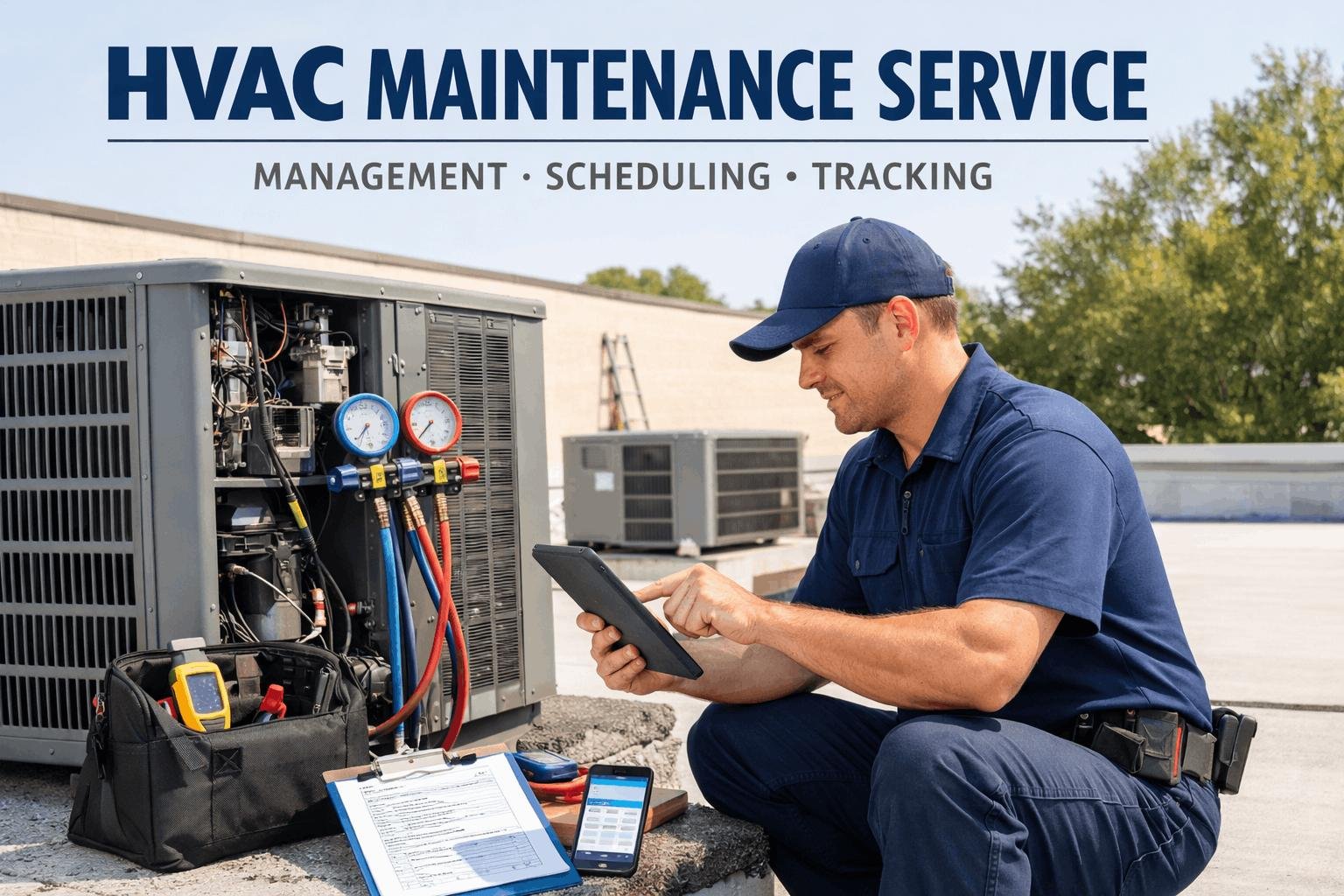
HVAC Dispatch Software
Running an HVAC business involves much more than repairing air conditioners and heating systems. Business owners must schedule jobs, dispatch technicians, manage customer information, create invoices, and track daily operations. When these tasks are handled manually, mistakes can happen and valuable time can be lost.
This is why many HVAC companies are investing in hvac dispatch software. These solutions help businesses organize their field operations and improve communication between office staff and technicians.
Whether a company handles residential service calls or large commercial projects, having the right software can make a major difference in efficiency and customer satisfaction.
Today, customers expect fast service, accurate scheduling, and clear communication. HVAC businesses that use modern software are often better equipped to meet these expectations.
In this guide, we will explain what HVAC dispatch software is, how it works, its benefits, important features, and how to choose the right solution for your business.
What Is HVAC Dispatch Software?
HVAC dispatch software is a digital tool that helps HVAC companies schedule, assign, and manage service calls.
The software acts as a central platform where office staff can monitor technicians, schedule appointments, communicate with customers, and track job progress.
Instead of relying on paper schedules, phone calls, and spreadsheets, businesses can manage operations from one system.
Common functions include:
- Job scheduling
- Technician dispatching
- Customer management
- Route planning
- Invoice creation
- Work order tracking
- Reporting and analytics
The goal is to simplify operations and improve productivity.
Why HVAC Businesses Need Dispatch Software
As HVAC companies grow, managing daily operations becomes more challenging.
Without a proper system, businesses may experience:
- Missed appointments
- Scheduling conflicts
- Delayed service calls
- Communication issues
- Billing mistakes
- Lost paperwork
HVAC dispatch software helps solve these problems by creating a more organized workflow.
Businesses can respond to customer requests faster and ensure technicians arrive at the right location with the necessary information.
How HVAC Dispatch Software Works
The software connects office staff, field technicians, and customers through a centralized platform.
Customer Request
A customer contacts the HVAC company for service.
Job Creation
Office staff create a work order in the system.
Technician Assignment
The dispatcher assigns the job to the most suitable technician.
Mobile Updates
Technicians receive job details through a mobile device.
Service Completion
The technician completes the work and updates the system.
Invoice Generation
The software generates invoices and records payment information.
This process reduces paperwork and improves communication across the business.
Key Features of HVAC Dispatch Software
Modern HVAC software platforms offer many useful tools.
Scheduling and Dispatching
Schedulers can assign jobs quickly and efficiently.
Technician Tracking
GPS features help monitor technician locations.
Customer Database
Customer information is stored in one place.
Work Order Management
Job details remain organized throughout the service process.
Mobile Access
Technicians can access information while in the field.
Invoicing and Payments
Invoices can be created and sent electronically.
Reporting
Managers can review performance data and business metrics.
Feature Comparison Table
| Feature | Benefit |
|---|---|
| Scheduling | Better job organization |
| GPS Tracking | Improved technician management |
| Customer Records | Faster service history access |
| Mobile App | Real-time communication |
| Invoicing | Faster billing process |
| Reporting | Better business insights |
| Work Orders | Improved workflow management |
These features help HVAC companies operate more efficiently.
Benefits of HVAC Dispatch Software
There are several reasons HVAC businesses invest in dispatch software.
Better Scheduling
Office staff can assign jobs quickly without confusion.
Faster Response Times
Technicians receive service requests immediately.
Improved Customer Service
Customers receive timely updates and appointment information.
Increased Productivity
Technicians spend more time working and less time handling paperwork.
Better Communication
Everyone stays informed about job status and scheduling changes.
Reduced Administrative Work
Automation eliminates many manual tasks.
These advantages can contribute to business growth and customer satisfaction.
Common Challenges Without Dispatch Software
Many HVAC businesses begin with manual processes.
While these methods may work initially, they often create challenges as the company grows.
Scheduling Errors
Double bookings and missed appointments can occur.
Lost Information
Paper records can be misplaced.
Poor Visibility
Managers may not know where technicians are located.
Delayed Communication
Important updates may not reach technicians quickly.
Billing Delays
Manual invoicing often takes longer.
HVAC dispatch software helps reduce these issues.
Residential vs Commercial HVAC Operations
Residential and commercial HVAC projects often have different requirements.
Comparison Table
| Category | Residential HVAC | Commercial HVAC |
| Project Size | Smaller | Larger |
| Scheduling Complexity | Moderate | High |
| Equipment Type | Residential Systems | Commercial Systems |
| Service Frequency | Occasional | Regular Contracts |
| Documentation Needs | Basic | Extensive |
Businesses handling commercial projects often require more advanced software capabilities.
Commercial HVAC Software
Many HVAC companies expand beyond residential services and begin managing larger commercial projects.
In these situations, commercial hvac software can provide additional features designed for complex operations.
These features may include:
- Contract management
- Multi-location scheduling
- Asset tracking
- Preventive maintenance planning
- Detailed reporting
- Team management tools
Commercial projects often involve larger teams and longer service agreements, making advanced software especially valuable.
Why Mobile Access Is Important
Today’s HVAC technicians spend most of their day in the field.
Mobile access allows technicians to:
- Receive new assignments
- View customer information
- Update job status
- Upload photos
- Create invoices
- Collect signatures
This improves efficiency and reduces delays.
Real-time access also helps technicians provide better customer service.
Also Read – HVAC Dispatch Software: Streamline Scheduling and Field Service Operations
Customer Experience and HVAC Dispatch Software
Customer satisfaction plays a major role in business success.
Modern dispatch software helps improve the customer experience by providing:
Faster Scheduling
Appointments can be booked quickly.
Appointment Notifications
Customers receive reminders and updates.
Accurate Arrival Times
GPS tracking helps provide realistic arrival estimates.
Better Communication
Customers stay informed throughout the service process.
Digital Invoices
Billing becomes more convenient.
Happy customers are more likely to return and recommend the business to others.
How HVAC Dispatch Software Improves Revenue
Software can directly impact profitability.
More Completed Jobs
Efficient scheduling allows technicians to handle more service calls.
Reduced Travel Time
Optimized routes improve productivity.
Faster Payments
Digital invoices help accelerate payment collection.
Better Resource Utilization
Managers can allocate technicians more effectively.
Improved Customer Retention
Satisfied customers often become repeat customers.
These benefits can contribute to long-term business growth.
Choosing the Best HVAC Dispatch Software
Finding the best hvac dispatch software requires careful evaluation.
Every HVAC company has unique needs.
Ease of Use
The software should be easy for office staff and technicians to learn.
Mobile Functionality
Field technicians need reliable mobile access.
Scheduling Tools
Advanced scheduling features improve efficiency.
Reporting Features
Managers should have access to useful business insights.
Integration Options
The software should work with existing business systems.
Customer Support
Reliable support helps resolve issues quickly.
Taking time to compare options can help businesses make the right decision.
Questions to Ask Before Purchasing
Before selecting software, consider these questions:
- Does the system support mobile devices?
- Can it handle future business growth?
- Does it include invoicing features?
- How easy is it to train employees?
- What reporting tools are available?
- Does it support commercial projects?
- What customer support options are offered?
These questions help identify the most suitable solution.
Future Trends in HVAC Software
Technology continues to change how HVAC businesses operate.
Several trends are shaping the future.
Cloud-Based Systems
More businesses are moving to cloud platforms.
Mobile Technology
Mobile access continues becoming more important.
Automation
Routine administrative tasks are increasingly automated.
Predictive Maintenance
Businesses are using data to identify equipment issues earlier.
Enhanced Reporting
Managers want better visibility into business performance.
These developments are helping HVAC companies become more efficient and competitive.
Why HVAC Businesses Are Investing in Software
The HVAC industry is becoming increasingly competitive.
Customers expect fast service, accurate communication, and professional experiences.
Businesses that use modern technology are often better positioned to meet these expectations.
HVAC dispatch software helps companies:
- Improve scheduling
- Increase productivity
- Reduce paperwork
- Enhance customer service
- Support business growth
These advantages make software a valuable investment for many HVAC organizations.
Frequently Asked Questions (FAQs)
1. What is HVAC dispatch software?
HVAC dispatch software is a system that helps HVAC businesses schedule jobs, assign technicians, manage customers, and track service operations.
2. Why do HVAC companies use dispatch software?
It improves scheduling, communication, efficiency, customer service, and overall business management.
3. What features should HVAC dispatch software include?
Important features include scheduling, technician tracking, mobile access, invoicing, customer management, and reporting tools.
4. Can HVAC dispatch software improve customer satisfaction?
Yes. It helps provide faster scheduling, appointment reminders, and better communication.
5. Is HVAC dispatch software suitable for small businesses?
Yes. Many solutions are designed for businesses of all sizes.
6. What is commercial HVAC software?
Commercial HVAC software includes advanced features designed for larger projects, service contracts, and complex operations.
7. How does mobile access help HVAC technicians?
Mobile apps allow technicians to receive assignments, update job status, access customer information, and complete paperwork from the field.
8. Can HVAC dispatch software increase revenue?
Yes. Improved scheduling, faster payments, and higher productivity can support revenue growth.
9. How do I choose the best HVAC dispatch software?
Evaluate ease of use, mobile capabilities, reporting tools, scalability, integrations, and customer support.
10. Is cloud-based HVAC software better?
Cloud-based solutions often provide greater flexibility, remote access, automatic updates, and easier scalability.
Conclusion
Managing an HVAC business requires careful coordination between office staff, technicians, and customers. As service demands increase, manual scheduling and paperwork can create unnecessary challenges.
HVAC dispatch software helps businesses streamline operations, improve communication, and deliver better customer experiences. From scheduling service calls to managing invoices and tracking technicians, the right software can support nearly every part of the business.
Companies searching for the best hvac dispatch software should focus on ease of use, mobile access, scheduling capabilities, reporting features, and scalability. Businesses handling larger projects may also benefit from advanced commercial hvac software solutions.
By investing in the right technology, HVAC companies can improve efficiency, increase profitability, and build stronger relationships with customers.