Third Party Risk Management Software
Businesses today depend on outside vendors more than ever before. Companies use software providers, cloud services, payment processors, consultants, suppliers, and many other third-party partners to keep operations running smoothly. While these partnerships help businesses grow, they also create risks.
If a vendor experiences a security issue, data breach, compliance problem, or service interruption, your business could be affected. That is why many organizations are investing in third party risk management software to monitor and reduce risks linked to outside partners.
Managing vendor risk manually can take a lot of time and effort. Spreadsheets, emails, and paper documents often make the process difficult. A modern software solution helps companies organize vendor information, track risks, automate assessments, and improve compliance.
In this guide, you will learn what third party risk management software is, how it works, why businesses need it, and what features to look for when selecting a solution.
What Is Third Party Risk Management Software?
Third party risk management software is a digital platform designed to help organizations identify, assess, monitor, and manage risks associated with vendors and external partners.
Instead of tracking vendor information through multiple systems, businesses can use one platform to manage everything in a central location.
The software helps organizations:
- Evaluate vendor risks
- Monitor compliance requirements
- Track vendor performance
- Manage security reviews
- Store important documents
- Automate workflows
- Create risk reports
As companies continue working with more vendors, risk management becomes increasingly important.
Why Third-Party Risk Matters
Every vendor relationship introduces some level of risk.
For example, a company may hire a cloud storage provider to store customer information. If that provider suffers a cyberattack, sensitive business data could be exposed.
Similarly, a supplier that fails to deliver products on time could affect business operations and customer satisfaction.
Common third-party risks include:
| Risk Type | Description |
|---|---|
| Cybersecurity Risk | Data breaches and cyberattacks |
| Compliance Risk | Failure to meet legal requirements |
| Financial Risk | Vendor financial instability |
| Operational Risk | Service interruptions |
| Reputation Risk | Damage to company image |
| Data Privacy Risk | Exposure of customer information |
Without proper monitoring, these risks may go unnoticed until a serious problem occurs.
How Third Party Risk Management Software Works
A risk management platform helps businesses follow a structured process.
The typical workflow includes:
Vendor Identification
The organization creates a list of vendors and suppliers.
This provides visibility into all third-party relationships.
Risk Assessment
The software evaluates vendors based on factors such as:
- Data access
- Security controls
- Compliance requirements
- Financial health
- Service importance
Risk Scoring
Many systems assign a risk score to each vendor.
Higher-risk vendors receive additional monitoring.
Continuous Monitoring
Risk levels can change over time.
The software continuously tracks important vendor information and alerts users when issues arise.
Reporting
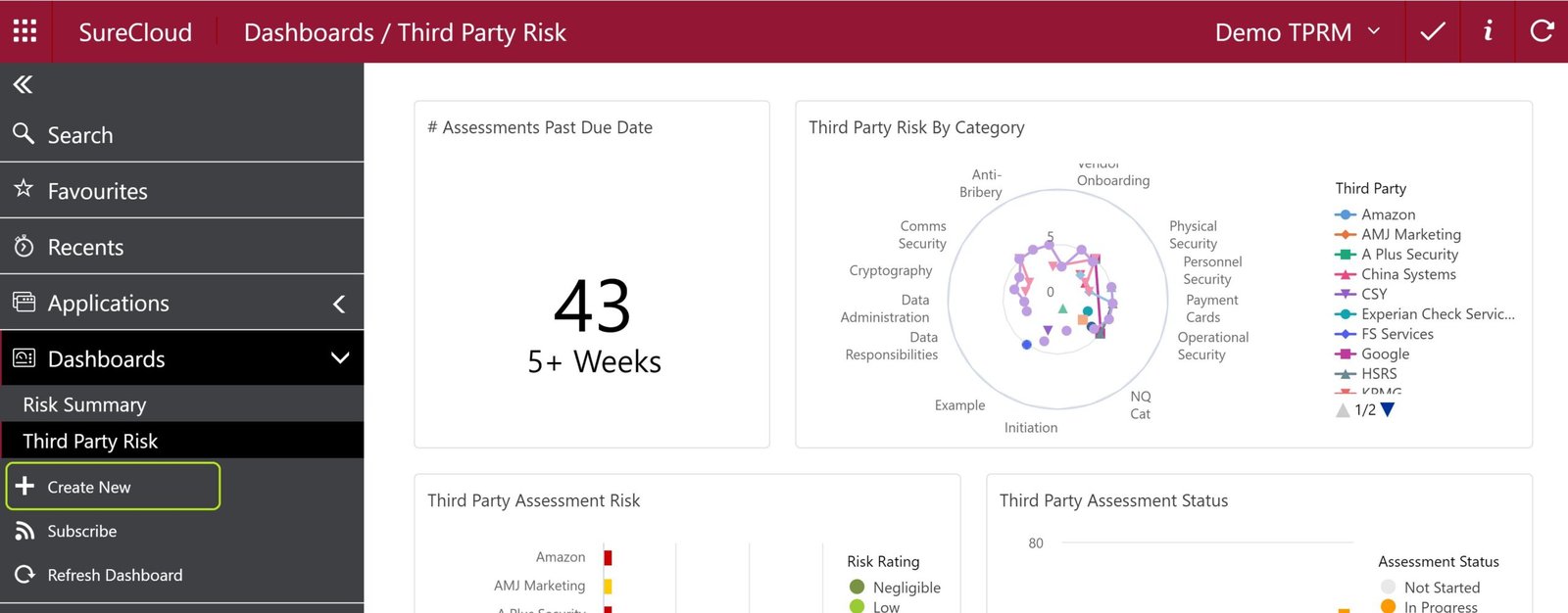
Business leaders can review dashboards and reports to understand vendor risk across the organization.
Benefits of Third Party Risk Management Software
Companies use these platforms because they provide many advantages.
Better Visibility
Organizations can view all vendors in one place.
This helps decision-makers understand where risks exist.
Time Savings
Manual processes often require significant effort.
Automation reduces repetitive tasks and improves efficiency.
Stronger Compliance
Many industries must follow strict regulations.
Software helps businesses track compliance requirements and maintain proper records.
Improved Security
Security assessments become easier when information is organized in a central platform.
Better Decision Making
Accurate risk data helps companies make informed choices about vendors.
Key Features to Look For
Not all solutions offer the same capabilities.
When evaluating third party risk management software, businesses should look for important features.
Risk Assessment Tools
Built-in questionnaires and assessment templates help organizations evaluate vendors consistently.
Workflow Automation
Automation reduces manual work and improves response times.
Compliance Tracking
Compliance monitoring helps organizations meet regulatory requirements.
Reporting Dashboards
Dashboards provide quick access to risk information.
Document Storage
Contracts, certifications, and security documents can be stored securely.
Alert Notifications
Real-time alerts help users respond quickly to potential risks.
Manual Risk Management vs Software Solutions
Many businesses begin with spreadsheets.
As vendor relationships increase, manual methods become difficult to manage.
Comparison Table
| Feature | Manual Process | Software Solution |
| Data Storage | Multiple Files | Centralized Platform |
| Risk Tracking | Manual Updates | Automated Monitoring |
| Reporting | Time Consuming | Instant Reports |
| Vendor Reviews | Difficult | Streamlined |
| Compliance Management | Limited | Advanced |
| Scalability | Low | High |
Software provides greater efficiency and accuracy as organizations grow.
Who Uses Third Party Risk Management Software?
Many industries rely on vendor risk management solutions.
Common users include:
- Banks
- Healthcare organizations
- Insurance companies
- Technology firms
- Government agencies
- Retail businesses
- Manufacturing companies
- Educational institutions
Any company that works with external vendors can benefit from improved risk oversight.
Understanding TPRM Tools
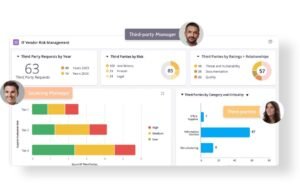
Many people refer to vendor risk platforms as TPRM tools.
TPRM stands for Third-Party Risk Management.
These tools help businesses manage the entire vendor lifecycle.
Some common functions include:
- Vendor onboarding
- Risk assessments
- Compliance reviews
- Continuous monitoring
- Risk reporting
- Contract management
Modern TPRM tools reduce administrative work and help organizations respond quickly to emerging risks.
Why Cybersecurity Is a Major Concern
Cybersecurity has become one of the biggest reasons companies invest in vendor risk management programs.
Many data breaches occur through third-party vendors.
A vendor with weak security controls can create vulnerabilities for its customers.
Third party risk management software helps organizations:
- Review security controls
- Assess vendor cybersecurity practices
- Monitor external risks
- Track security certifications
- Identify high-risk vendors
This helps reduce the chances of a costly security incident.
The Role of Compliance in Vendor Risk Management
Compliance requirements continue to grow across many industries.
Organizations may need to follow rules related to:
- Data privacy
- Financial reporting
- Information security
- Healthcare information
- Consumer protection
Failure to comply with regulations can lead to fines and reputational damage.
Risk management software helps businesses maintain documentation and demonstrate compliance efforts.
Challenges Businesses Face Without Risk Management Software
Companies that rely on manual processes often encounter problems.
Limited Visibility
Vendor information may be scattered across multiple systems.
Missed Deadlines
Important reviews and certifications may expire without notice.
Slow Assessments
Manual reviews often require significant time and resources.
Inconsistent Processes
Different teams may evaluate vendors using different standards.
Increased Risk
Without proper monitoring, critical issues may go undetected.
Also check – Third Party Risk Management Software: Strengthen Vendor Risk and Compliance
How to Choose the Best Third Party Risk Management Software
Finding the best third party risk management software depends on business needs.
Several factors should be considered.
Ease of Use
Employees should be able to navigate the platform without extensive training.
Scalability
The system should support future growth.
Security Features
Strong security protections are essential.
Customization
Organizations often need workflows that fit their specific requirements.
Reporting Capabilities
Detailed reporting helps management make informed decisions.
Customer Support
Reliable support can be valuable during implementation and ongoing use.
Questions to Ask Before Buying
Before selecting a solution, organizations should ask:
- Does the platform support our industry requirements?
- Can it automate vendor assessments?
- How are risk scores calculated?
- What reporting options are available?
- Does the system integrate with other business tools?
- How often is monitoring updated?
- What security protections are included?
These questions can help businesses identify the right platform.
Common Mistakes in Vendor Risk Management
Many organizations make avoidable mistakes.
Focusing Only on New Vendors
Existing vendors also require ongoing monitoring.
Ignoring Small Vendors
Even small vendors may create significant risks.
Using Outdated Information
Vendor conditions can change quickly.
Lack of Documentation
Incomplete records make audits more difficult.
No Continuous Monitoring
Risk management should be an ongoing process rather than a one-time review.
Future Trends in Third-Party Risk Management
Vendor risk management continues to evolve.
Several trends are shaping the future.
Greater Automation
More tasks are becoming automated.
Continuous Monitoring
Real-time risk tracking is becoming more common.
Better Reporting
Organizations want faster access to actionable risk insights.
Increased Regulatory Focus
Compliance requirements are expected to continue growing.
Stronger Cybersecurity Integration
Security and risk management functions are becoming more connected.
Businesses that adopt modern solutions will be better prepared for future challenges.
Frequently Asked Questions (FAQs)
1. What is third party risk management software?
Third party risk management software is a platform that helps businesses identify, assess, monitor, and manage risks associated with vendors and external partners.
2. Why is vendor risk management important?
Vendor risk management helps reduce cybersecurity, compliance, operational, and financial risks that may arise from third-party relationships.
3. Who should use third party risk management software?
Any organization that works with vendors, suppliers, contractors, or service providers can benefit from using the software.
4. What are TPRM tools?
TPRM tools are solutions designed to help organizations manage third-party risks through assessments, monitoring, reporting, and compliance tracking.
5. How does risk scoring work?
Risk scoring evaluates vendors based on factors such as security controls, data access, compliance requirements, and business impact.
6. What industries commonly use TPRM tools?
Banks, healthcare providers, insurance companies, technology firms, government agencies, retailers, and manufacturers frequently use these solutions.
7. Can third party risk management software improve compliance?
Yes. The software helps organizations track compliance requirements, maintain documentation, and prepare for audits.
8. What features should I look for in a solution?
Look for risk assessments, automation, reporting dashboards, compliance tracking, vendor monitoring, and document management.
9. What are the benefits of automated vendor monitoring?
Automated monitoring helps identify issues faster and reduces the need for manual reviews.
10. How do I choose the best third party risk management software?
Evaluate ease of use, scalability, security features, reporting capabilities, customer support, and integration options before making a decision.
Conclusion
Vendor relationships are an important part of modern business operations. While these partnerships create opportunities for growth, they also introduce risks that must be managed carefully.
Third party risk management software helps organizations identify risks, improve compliance, strengthen security, and streamline vendor oversight. As companies work with more vendors, manual processes often become difficult to manage. Software solutions provide a more efficient and organized approach.
Whether you are evaluating vendor security, monitoring compliance requirements, or searching for the best third party risk management software, investing in the right platform can improve risk visibility and support better business decisions.
Modern TPRM tools help organizations stay proactive, reduce risk exposure, and build stronger relationships with trusted vendors. In today’s business environment, effective third-party risk management is no longer optional—it is an important part of long-term success.